











Museo Regional de Michoacán, Dr. Nicolás León Calderón
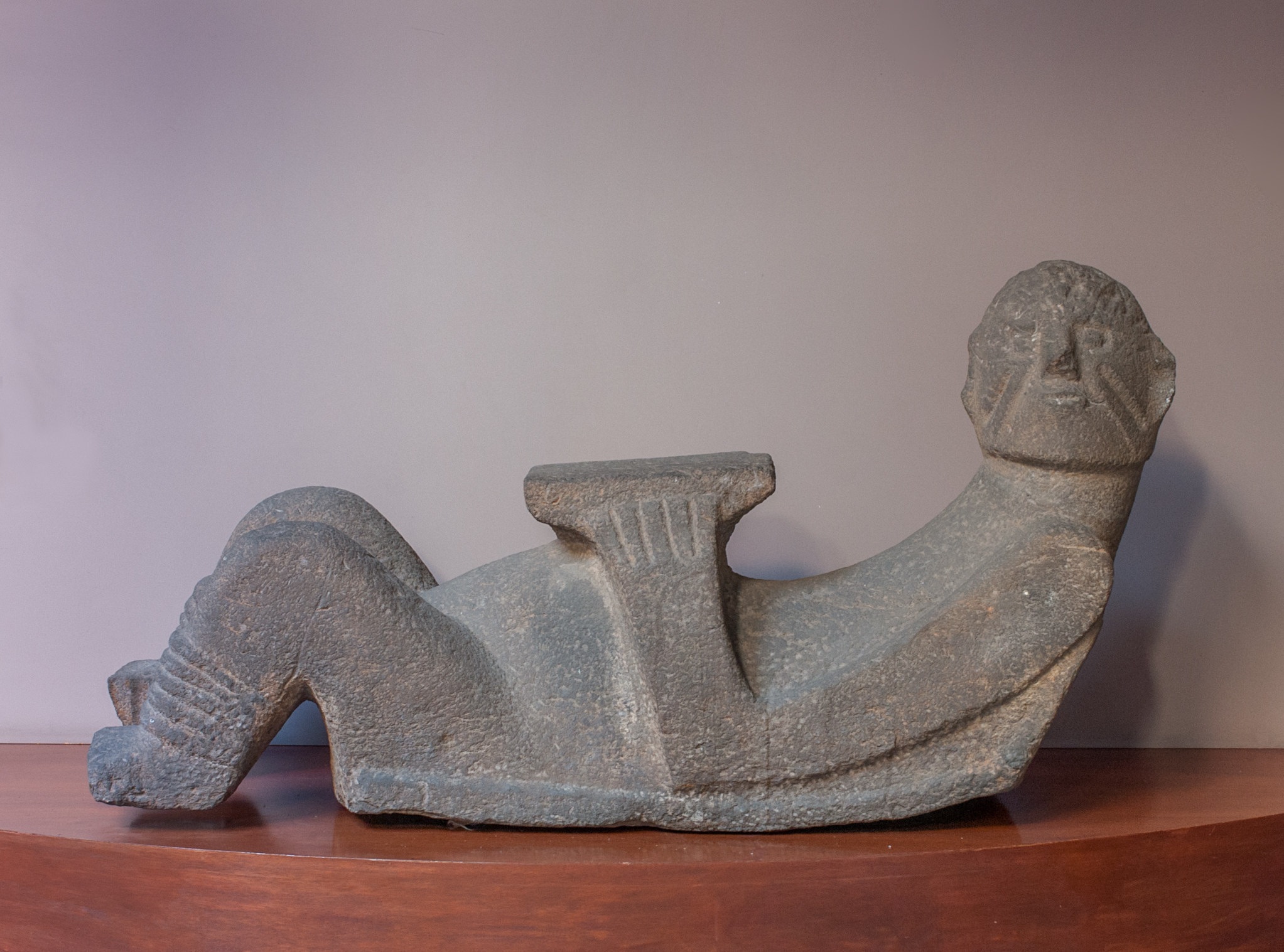
First established in 1886 in a palace in the city of Morelia, the museum houses a splendid collection of pre-Hispanic artefacts, assembled by the institution’s first director, Nicolás León, as well as plates of rare codices, maps, ancient items of clothing and objects of historic importance such as the table where the Constitution of Apatzingán was signed.
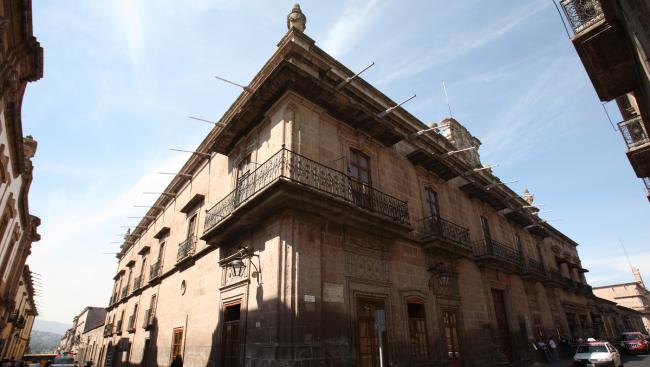
This is the oldest museum in the National Institute of Anthropology and History’s network, with exhibits on the history and culture of Michoacán since the first human settlements until the final days of the Porfirio Díaz regime. The building itself is a remarkable construction dating from the second half of the eighteenth century and, according to the scholar Gabriel Silva Mandujano, it is the finest example of residential architecture in the city of Valladolid (as Morelia was previously called) of its time. Built in 1775, and originally belonging to Isidro Huarte, the mansion later became the property of Ignacio Montenegro following the first owner’s death. It was subsequently turned into the Tridentine Seminary, and eventually passed into the hands of Manuel Malo. During the administration of General Mariano Jiménez (1885-1892), the government acquired the property in order to establish an academy for girls, but on January 30, 1886, it was decided to establish a museum instead. The new institution was run by Dr. Nicolás León (1859-1929), a Mexican physician, historian, linguist, ethnologist, anthropologist, author and naturalist.
In the early years, León’s collection was itinerant and moved between the Colegio de San Nicolás and the Palacio de Gobierno, until it found a permanent home in 1915 in this palatial, baroque building in Morelia, in order to be preserved as part of an effort to raise public awareness of research work related to Michoacán’s cultural heritage.
In 2011, the historic building occupied by the Regional Museum of Michoacán was painstakingly restored, and a new exhibition design now invites the public to discover the region’s history from the perspective of archeology, history, and art; the collection consists of more than 300 items exhibited in 12 permanent galleries organized by theme and focused on the cultural development of today’s state of Michoacán.
The following murals in this building were also restored as part of this renovation process: Grace Greenwood’s “Hombres y máquinas” (“Men and Machines,” 1934); Philip Guston and Reuben Kadish’s “La Inquisición” (“The Inquisition,” 1935); Federico Cantú’s “Los cuatro jinetes del Apocalipsis” (“The Four Horsemen of the Apocalypse,” 1954); as well as Alfredo Zalce’s “Los defensores de la integridad nacional” (“Defenders of National Integrity,” 1951) and “Los pueblos del mundo contra la guerra atómica” (“The Peoples of the World Against Nuclear War,” 1951).
Various codex plates are also on display in the museum, including “Relación de Michoacán” (“Account of Michoacán) , the “Lienzo de Xiuhquilan” (“Canvas of Xiuhquilan”) and the “Títulos de Carapan” (“Titles of Carapan”). The exhibition also shows maps that highlight changes to the region after the Spaniards’ incursion and evangelization, as well as supporting visual materials to provide a chronological and geographical context to each historical event. Clothing, furniture and everyday items also form part of the collection.
Historic artefacts include the table on which the Constitution of Apatzingán was signed, a collection of portraits of historical figures such as Vasco de Quiroga, Agustín de Iturbide, Melchor Ocampo, and some governors of the state of Michoacán.
An eighteenth-century oil painting called “Traslado de las monjas catarinas a su nuevo convento” (“Journey of the Nuns of Saint Catherine to their New Convent”), by an anonymous artist, is one of the most popular exhibits due to its portrayal of the city; also worth seeing are the murals by artists such as Alfredo Zalce, the representation of the Conspiracy of Michoacán, and the Jicalán and Carapan oil paintings from the sixteenth century and eighteenth century, respectively.
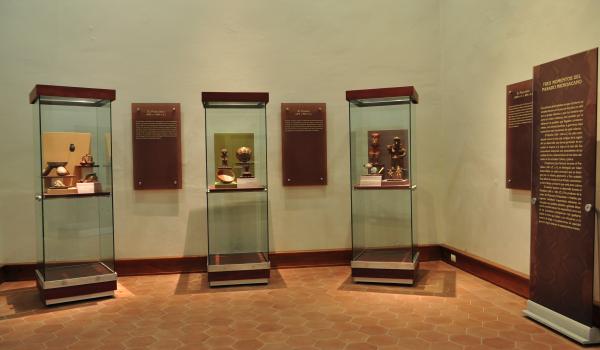
Ancient Michoacán (2000 BCE–1521 CE)
This section offers a brief overview of the cultural significance of different periods in ancient Michoacán: the Formative or Preclassic period (3000 BCE–200 CE), the Classic period (200–900 CE), and the Postclassic period (900–1500 CE).Three Periods in Michoacán’s PastThe cultures that flourished…
Ancient Michoacán (2000 BCE–1521 CE)
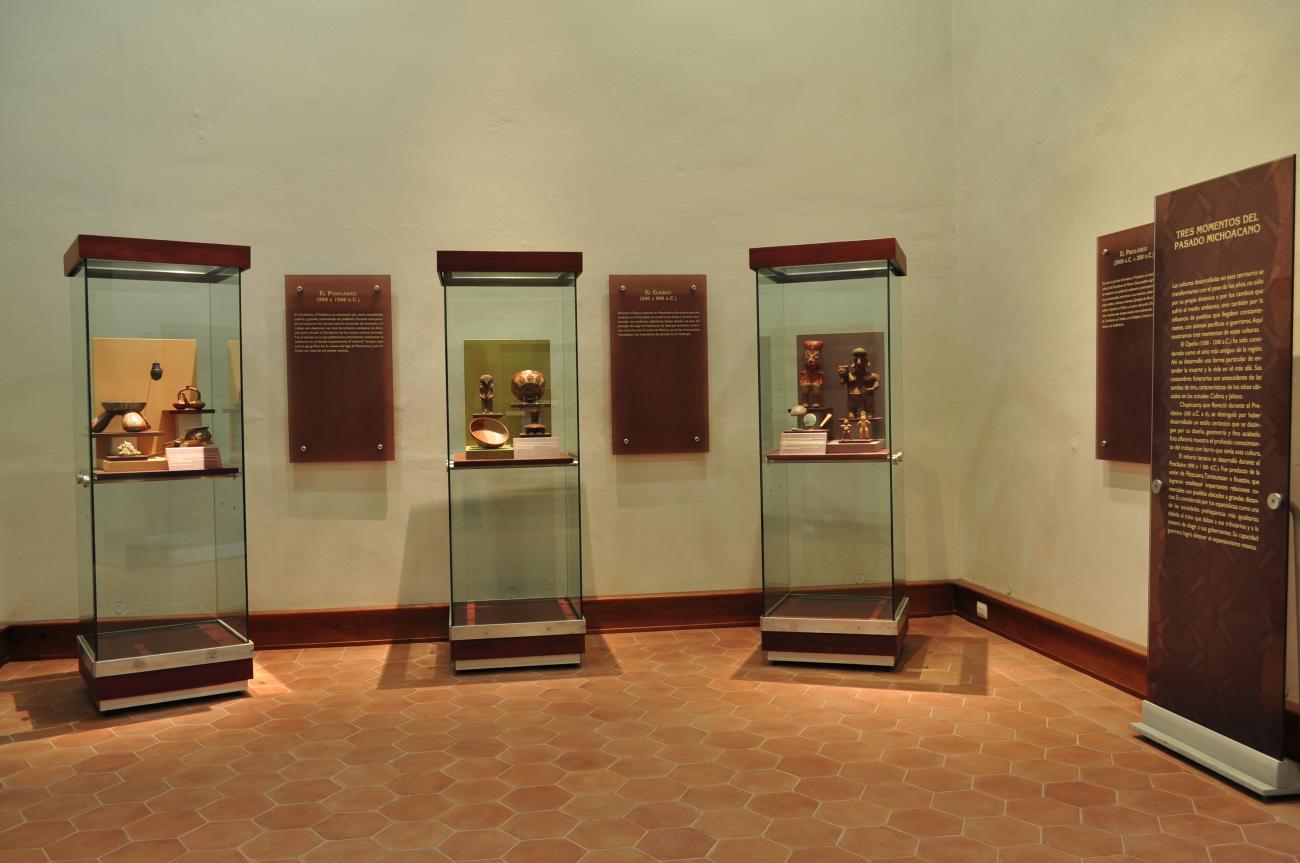
This section offers a brief overview of the cultural significance of different periods in ancient Michoacán: the Formative or Preclassic period (3000 BCE–200 CE), the Classic period (200–900 CE), and the Postclassic period (900–1500 CE).
Three Periods in Michoacán’s Past
The cultures that flourished in this region evolved over time, shaped not only by their own internal dynamics or environmental changes, but also by the constant arrival of other peoples—sometimes peaceful, sometimes warlike. These galleries explore three key periods in the cultural history of the region.
The Preclassic (3000 BCE–200 CE)
The cultural development of western Mexico began during the Formative or Preclassic period. These early agricultural societies, which supported permanent settlements, built villages and ceremonial centers, buried their dead, and developed complex ceramic styles and techniques. Notable examples include El Opeño, the Capacha culture in Colima, and, a bit later, Chupícuaro. There is evidence of interaction between western cultures and others such as Tlatilco in the Central Highlands, as well as with peoples from the Caribbean and even South America.
The Classic Period (200–900 CE)
During the Classic period, while great cities thrived across Mesoamerica, western Mexico retained its village-based society and ceremonial centers, although with some emerging unifying tendencies. Zacapu briefly shared in the prestige of Teotihuacan’s rise. Cultural ties with central Mexico are well documented, and one of the most significant technological advancements of the time was the development of metallurgy.
The Postclassic Period (900–1500 CE)
The Postclassic in western Mexico was marked by political instability and major population movements. This period saw improved techniques in mineral extraction and metal alloy production. Trade routes shifted to connect the west with newly dominant centers of power. Formerly autonomous communities united under the expansionist Tarascan state, which was centered in the Lake Pátzcuaro basin. This polity successfully resisted repeated attempts at incursion by the Mexica (Aztecs).

El Opeño, Chupícuaro, Tingambato, Tzintzuntzan
Four major cultural phases are highlighted in Michoacán’s archaeological record: the El Opeño culture (1500–1200 BCE), Chupícuaro culture (400 BCE–250 CE), Tingambato (500–900 CE), and the Tarascan culture, which flourished during the Postclassic period (900–1522 CE).The Tombs of El OpeñoEl Opeño…
El Opeño, Chupícuaro, Tingambato, Tzintzuntzan
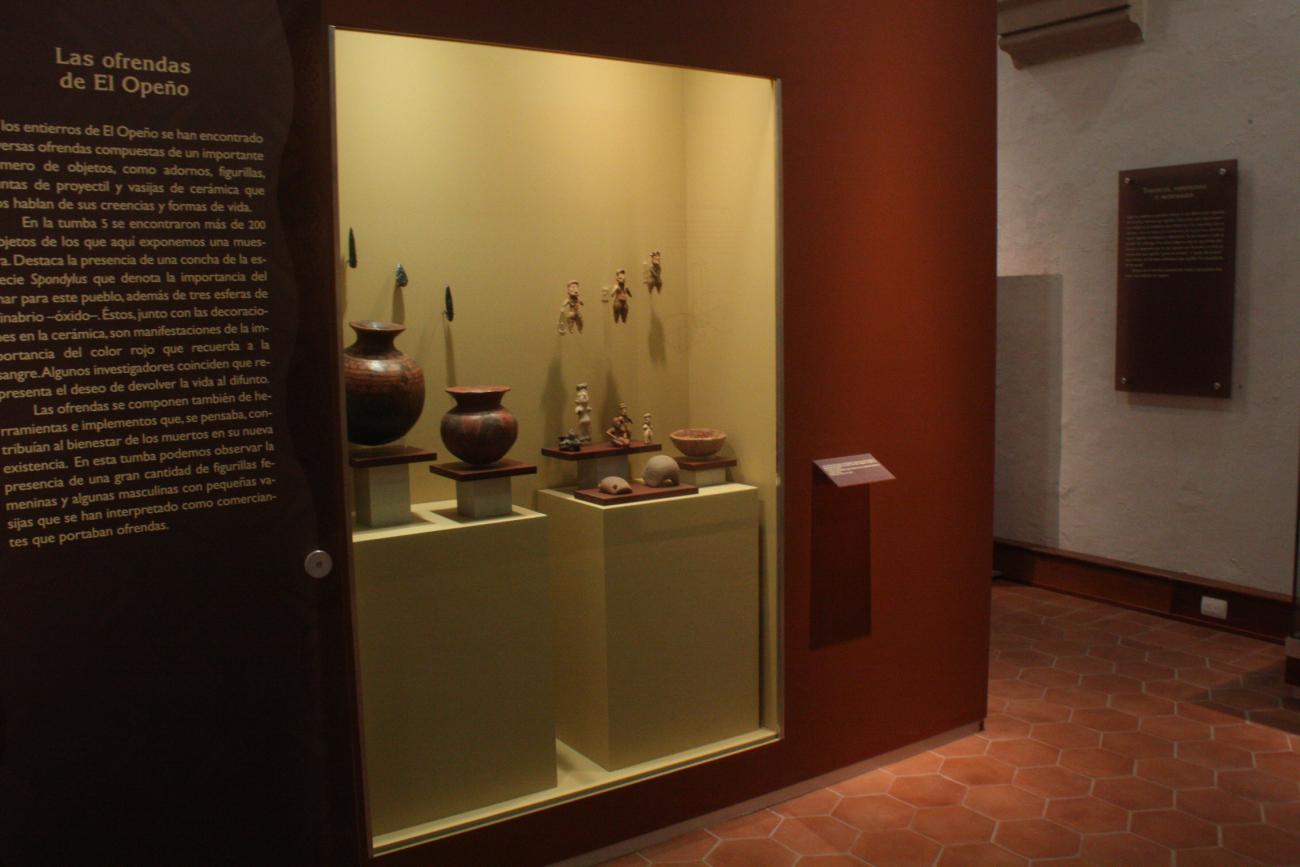
Four major cultural phases are highlighted in Michoacán’s archaeological record: the El Opeño culture (1500–1200 BCE), Chupícuaro culture (400 BCE–250 CE), Tingambato (500–900 CE), and the Tarascan culture, which flourished during the Postclassic period (900–1522 CE).
The Tombs of El Opeño
El Opeño is one of the most significant archaeological sites representing the earliest known inhabitants of Michoacán. Located in the present-day municipality of Jacona, it was a village site whose tombs and burial offerings are the oldest known in western Mexico. These were underground chambers covered by vaulted roofs, dug into the subsoil and accessed by staircases. The deceased were placed inside, and the entrance was sealed with large stone slabs.
The Chupícuaro Culture
Chupícuaro emerged in the Acámbaro Valley, atop a small hill at the confluence of the Lerma and Tigre Rivers. Nearby obsidian and cinnabar deposits, along with the surrounding river network, made it an ideal location for agriculture and settlement.
Chupícuaro is the best-known Preclassic (or Late Formative, 500 BCE–0 CE) site in western Mexico. Its people lived in simple wattle-and-daub houses with stone coverings. Unfortunately, the construction of the Solís Dam flooded the area and submerged much of its archaeological heritage. However, a remarkable collection of ceramics survives, showcasing techniques and designs that influenced a broad region. Similar pottery has been found around the Yuriria and Cuitzeo lake basins, in parts of Jalisco, and throughout the Bajío, indicating strong cultural exchange.
Halfway Between Worlds: Tingambato
Tingambato—also called Tinganio—is located between present-day Uruapan and Pátzcuaro. In the Purépecha language, its name means “the place where fire ends.” It lies on the boundary between the hot and cold lands. Tingambato was an important ceremonial center, first settled some 1,800 years ago by ancestors of the Tarascan kingdom, which flourished around 1450. The ceramic remains show continuity with Chupícuaro traditions while also serving as precursors to the styles later seen in Tarascan centers such as Tzintzuntzan and Ihuatzio.
Unusually, the architecture at Tingambato includes features like sloping walls (talud) and vertical panels (tablero), a style associated with Teotihuacan. However, the lack of finer finish has led some archaeologists to question whether this represents direct influence or simply shared architectural experimentation.
Tzintzuntzan: The Rise of the Purépecha State
Located at the heart of the Lake Pátzcuaro basin, Tzintzuntzan—meaning “place of the hummingbirds”—was the last great capital of the Tarascan (or Purépecha) state. Founded by the cazonci (ruler) Tariácuri around 1325, it reached a peak population of 40,000. From here, political, economic, and religious control extended across the coastal regions, Tierra Caliente, the Bajío of Guanajuato, and parts of Guerrero and Jalisco.
Its position on the slope of Yahuarato hill gave it wide visibility across the basin and natural protection. Tzintzuntzan also had a pier, enabling travel to other communities around the lake and beyond, such as the Ciénega of Zacapu, an important Tarascan stronghold.
One of the Tarascan state's most important frontiers was its eastern boundary with a powerful enemy: the Mexica. Despite several attempted invasions, the Tarascans repeatedly repelled them, earning their adversaries' respect. Skilled warriors, the Tarascans also stood out for maintaining peaceful relations with their tributary communities.
The Tarascan culture became one of the most significant societies of the Postclassic era, noted for its craftsmanship in turquoise, obsidian, metals, and pottery. Its legacy laid the foundation for a lasting cultural identity that continues to this day.
Worldview and Conquest
This section explores the rupture in Tarascan history, beginning with their worldview and prophetic omens foretelling the end of their world. It continues with the Spanish conquest and the establishment of a new territorial order, including the founding of towns and cities and the key role of…
Worldview and Conquest
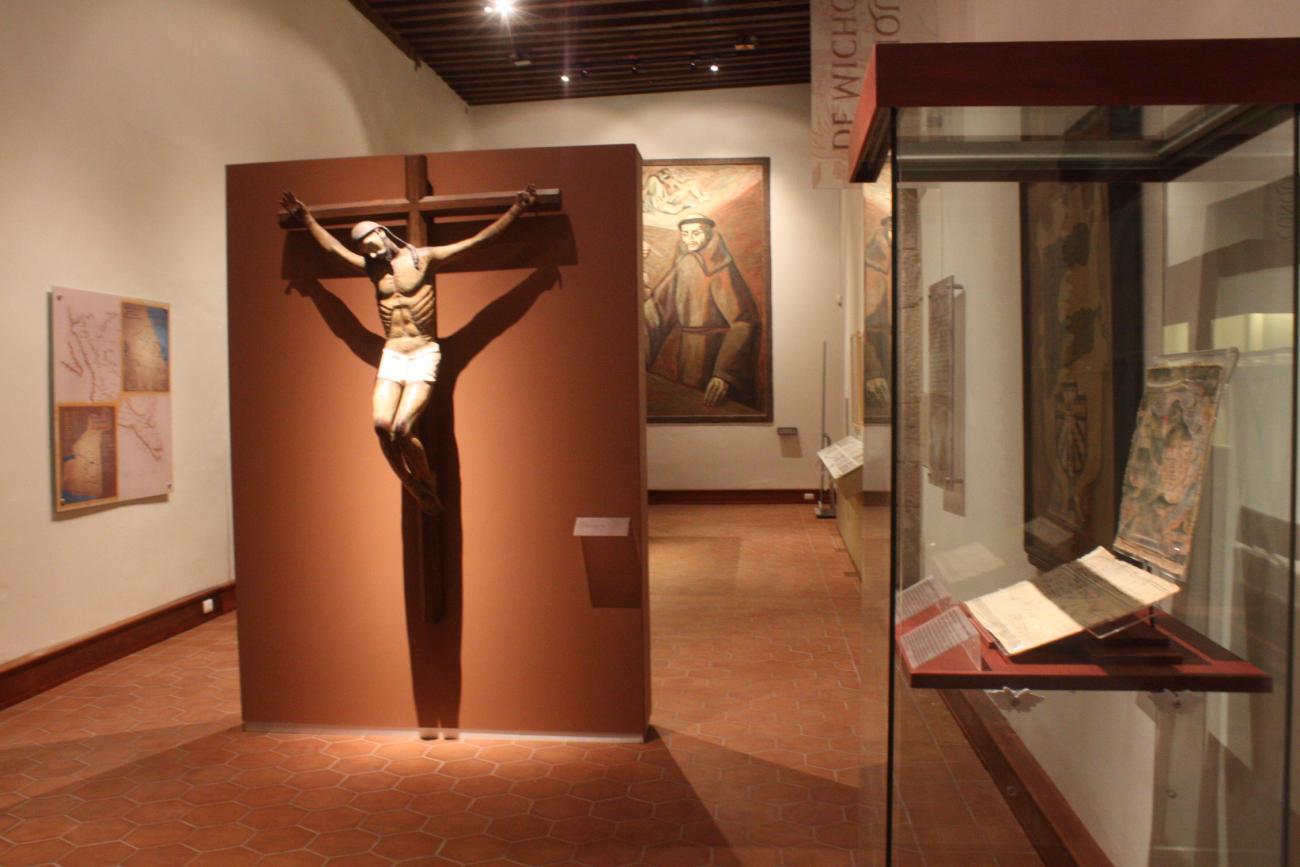
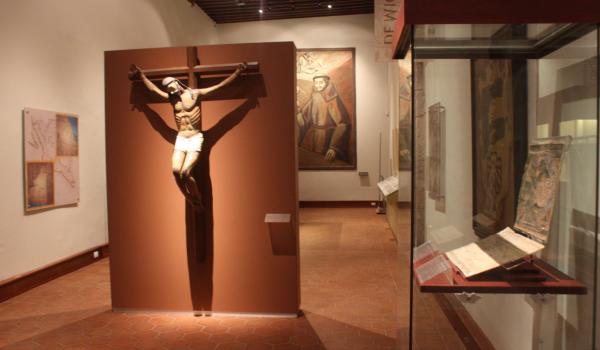
This section explores the rupture in Tarascan history, beginning with their worldview and prophetic omens foretelling the end of their world. It continues with the Spanish conquest and the establishment of a new territorial order, including the founding of towns and cities and the key role of evangelization—essential to understanding how Michoacán was colonized.
The landscape of the Lake Pátzcuaro basin, encircled by volcanoes and prone to frequent seismic activity, shaped the lives of the Tarascan people. Their principal deities were deeply connected to nature: the sun, moon, mountains, sea, and lakes. The arrival of Spanish forces in 1522 triggered a cascade of historical, political, and cultural changes that transformed the region forever.
The "Relación de Michoacán" recounts the omens that preceded the Spaniards’ arrival: prophetic dreams, meteor showers, earthquakes, and the cracking of temples—warnings from the gods that “all will be left deserted, for other men are coming to this land…”
And the omens came true. Spanish soldiers occupied Tarascan territory, destroyed sacred objects and sites, plundered treasures, and subdued the population. The land and its resources were parceled out among the Spanish as encomiendas. Soon after came the first missionaries and settlers, whose impact was equally profound: Indigenous people were resettled into new towns, small agricultural and livestock ventures were established, and mineral exploration began—forever altering the province’s landscape.
The arrival of the Spanish in the Americas, and particularly in Michoacán, was a violent collision of two distinct cultural universes. The execution of the last Tarascan cazonci, Tzitzincha Tangaxoan, at the hands of Spanish captain Nuño de Guzmán, marks the scale of that upheaval—a clash that would ultimately give birth to a new world: New Spain.
Evangelization in Michoacán
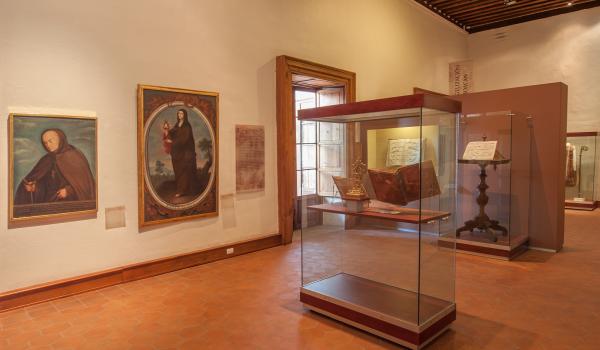
This section highlights the missionary work of Vasco de Quiroga and the newly arrived religious orders that supported his vision.Vasco de QuirogaVasco de Quiroga was born around 1480 in the town of Madrigal de las Altas Torres, in Old Castile. Trained as a lawyer, he eventually entered the service…
Evangelization in Michoacán
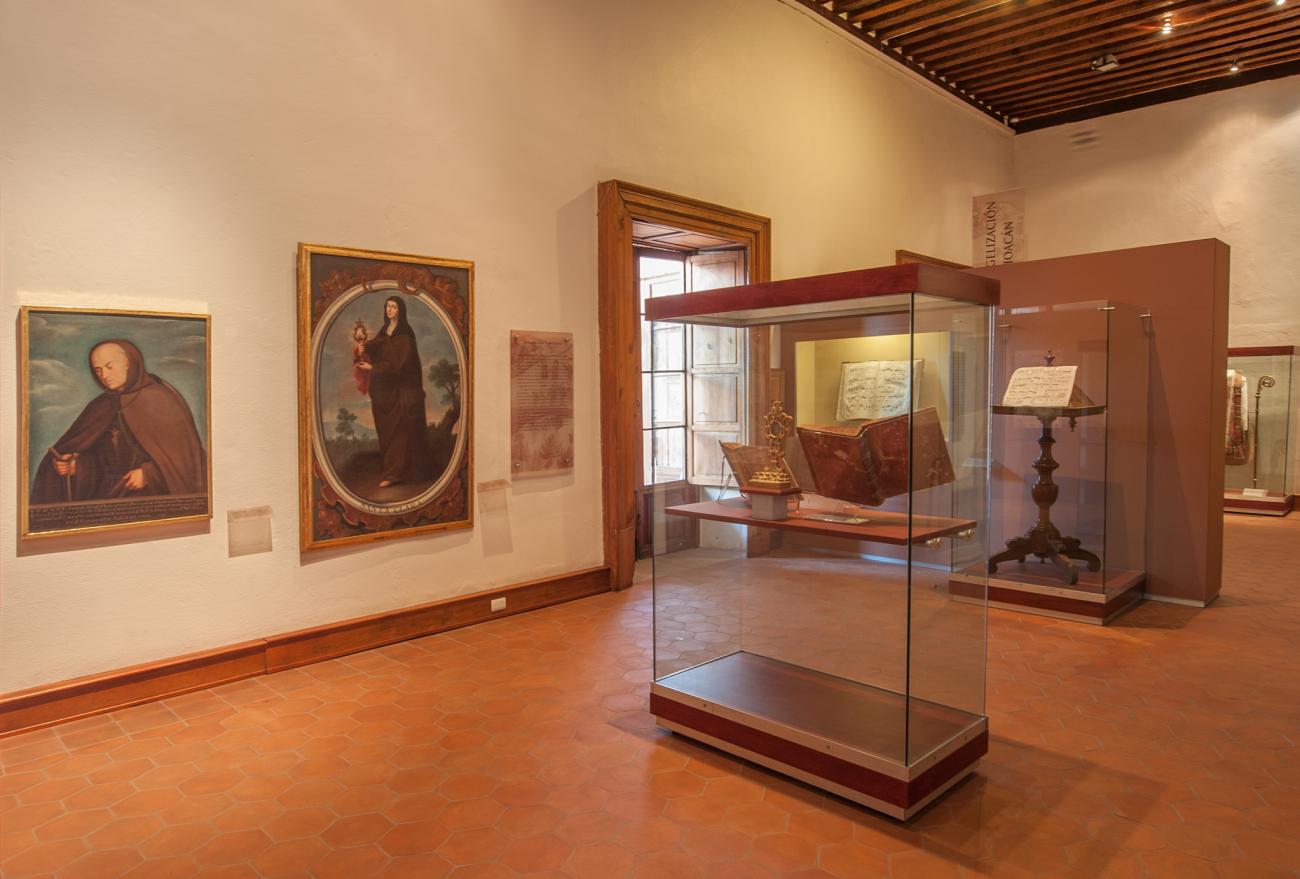
This section highlights the missionary work of Vasco de Quiroga and the newly arrived religious orders that supported his vision.
Vasco de Quiroga
Vasco de Quiroga was born around 1480 in the town of Madrigal de las Altas Torres, in Old Castile. Trained as a lawyer, he eventually entered the service of the Spanish Crown. His work as a public official took place outside the Iberian Peninsula, in Spain’s overseas territories. In 1525, he was appointed as a "juez de residencia" (royal inspector) in North Africa, and in 1531 he traveled to New Spain to serve as an "oidor" (judge) of the Second Royal Audiencia of Mexico. There, he encountered the complex reality that followed the Conquest: the exploitation and abuse of Indigenous people by "encomenderos", and a severe political crisis caused by the misrule of the First Audiencia.
Around 1533, Quiroga arrived in Michoacán as a visiting inspector for the Royal Audiencia to investigate Indigenous grievances and mining activities in the region. There, he carried out an outstanding social mission of pacification, evangelization, and community organization. Due to the importance of his work—and despite having no ecclesiastical training—the Crown proposed him as the first bishop of Michoacán, a position he held from 1538 until his death in 1565. Shortly before passing away, Vasco de Quiroga dictated a “Memoria y declaración,” considered his spiritual testament. In this document, he laid out the legal foundations for his major works and institutions: the Colegio de San Nicolás Obispo and the "pueblos-hospitales" (hospital-towns) of Santa Fe, inspired by Thomas More’s Utopia.

Codices, 16th–18th centuries
This exhibit displays original and reproduced codices and painted cloths from various Indigenous communities across the territory of Michoacán.Codices: Testimonies of Indigenous Oral TraditionMesoamerican Indigenous peoples developed a sophisticated tradition of pictographic writing. Each image or…
Codices, 16th–18th centuries
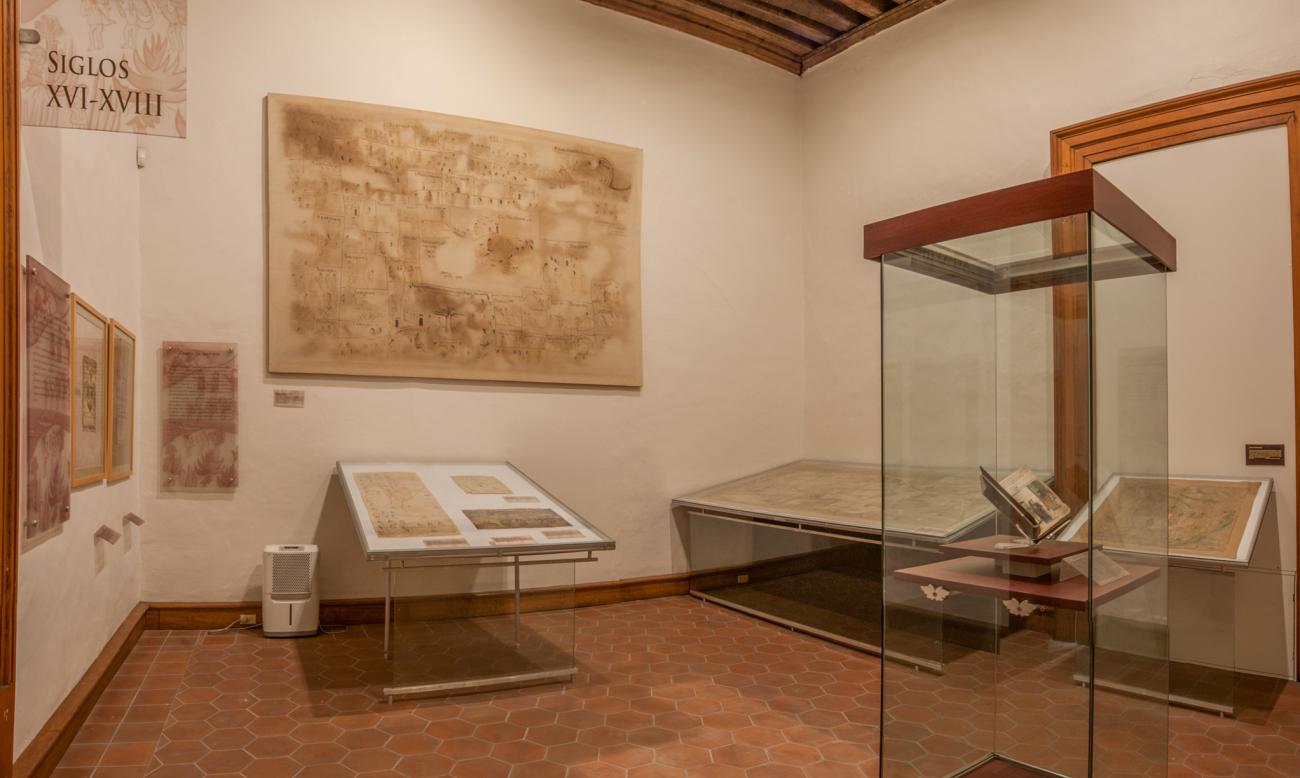
This exhibit displays original and reproduced codices and painted cloths from various Indigenous communities across the territory of Michoacán.
Codices: Testimonies of Indigenous Oral Tradition
Mesoamerican Indigenous peoples developed a sophisticated tradition of pictographic writing. Each image or pictogram represented a meaning, action, name, place, date, or number, preserving orally transmitted knowledge on amate paper, cloth, or leather. One of the primary purposes of codices and painted cloths was to record the historical and religious events of a community, legitimizing the authority of its leaders and their territorial rights.
With the arrival of the Spanish, the pictographic tradition persisted. Although no pre-Hispanic codices or cloths have been found in Michoacán, some documents from the colonial period have survived. These clearly show Western influence, both in technique and in the incorporation of European iconography and Latin-script glosses added by Purépecha scribes and painters known as carariecha.
Each document responded to specific needs and intentions. They depicted foundational stories, migrations, customs, rituals, sociopolitical structures, lineages, territorial jurisdictions, maps, and tax systems. Since codices and cloths were only reminders of orally conveyed information, they have been interpreted in various ways over the centuries. Much of their original meaning was lost with their authors, who were the keepers of the histories and traditions they illustrated.
The Bishopric of Michoacán
Through visual representations, this section explores the expansion of the Michoacán diocese beyond the former Tarascan domain. Its political and religious capital, Valladolid (now Morelia), benefited economically from the fertile Tierra Caliente region and the prosperous Bajío, making it one of…
The Bishopric of Michoacán
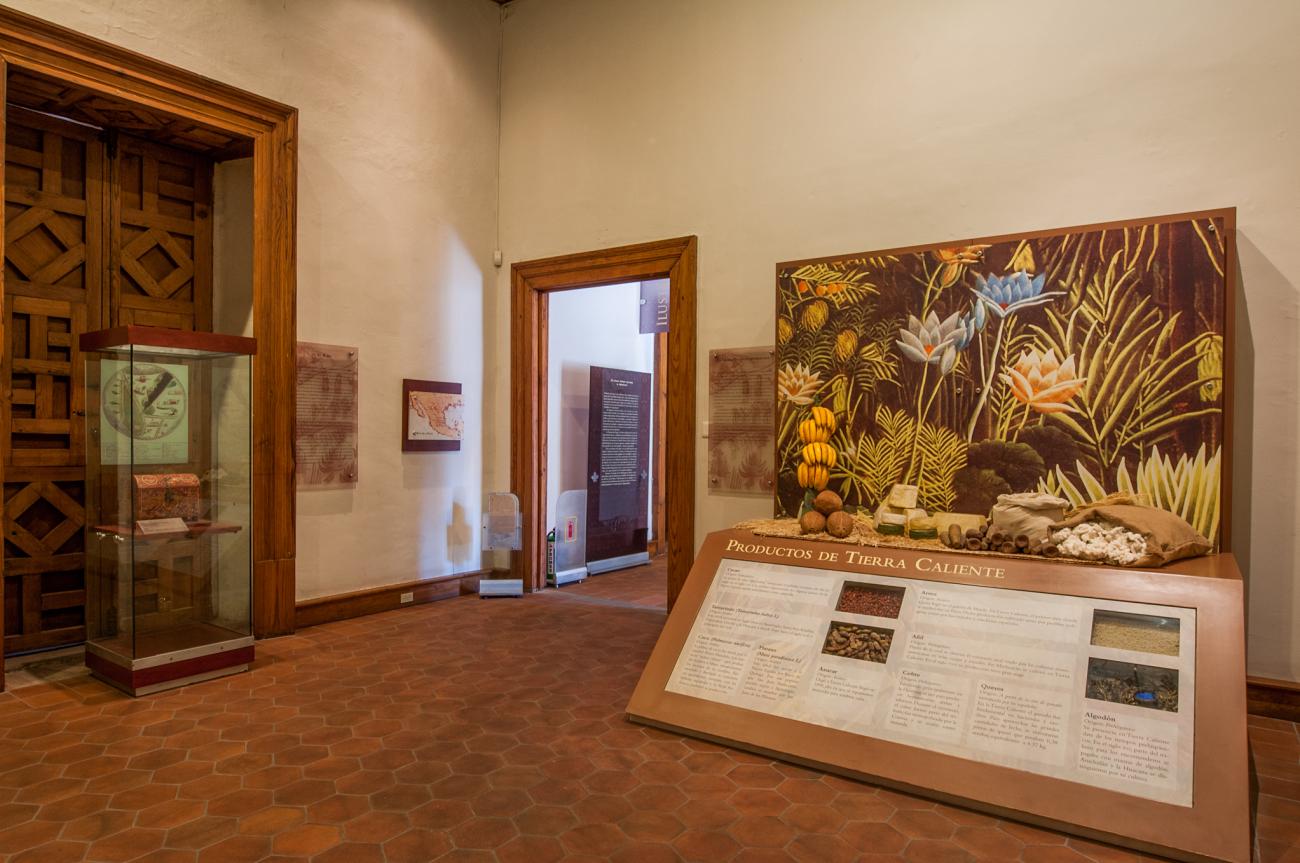
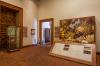
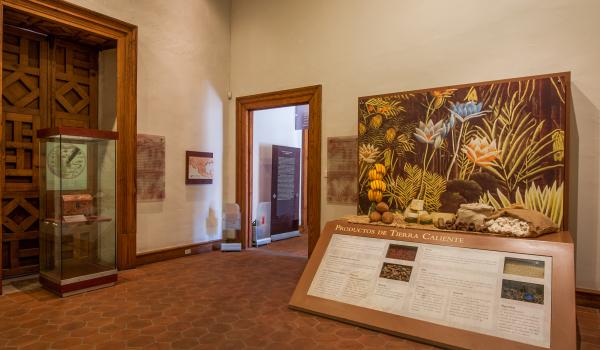
Through visual representations, this section explores the expansion of the Michoacán diocese beyond the former Tarascan domain. Its political and religious capital, Valladolid (now Morelia), benefited economically from the fertile Tierra Caliente region and the prosperous Bajío, making it one of the wealthiest bishoprics in New Spain.
Territory and Economy
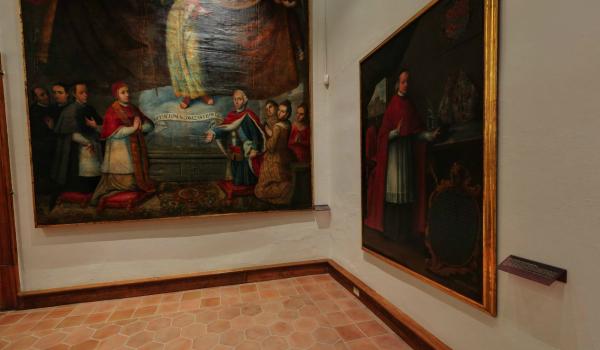
During the colonial period, the bishopric of Michoacán encompassed a vast and productive territory that, between the late 16th and 18th centuries, included present-day Michoacán, Guanajuato, Colima, and parts of Jalisco, Guerrero, and San Luis Potosí.
The bishopric's territory included diverse geographical zones dedicated to different economic activities. To the north were the rich mining districts of Guanajuato and San Luis Potosí. The Bajío region was known for its fertile lands, pastures, and livestock, while Tierra Caliente and the coast stood out for their varied agricultural and livestock production. In the 18th century, thanks to the development of these regions—particularly the Bajío and Tierra Caliente—the bishopric of Michoacán became one of the most prosperous dioceses in New Spain, ranking just behind Mexico and Puebla.
The Enlightenment and Bourbon Reforms
This section reflects the emergence of a new spirit sweeping across the Viceroyalty, ushering in changes that disrupted the established order. These reforms sparked reactions from both the elite and common people, laying the groundwork for rebellion.A New Spirit Sweeps the ViceroyaltyBy the late…
The Enlightenment and Bourbon Reforms
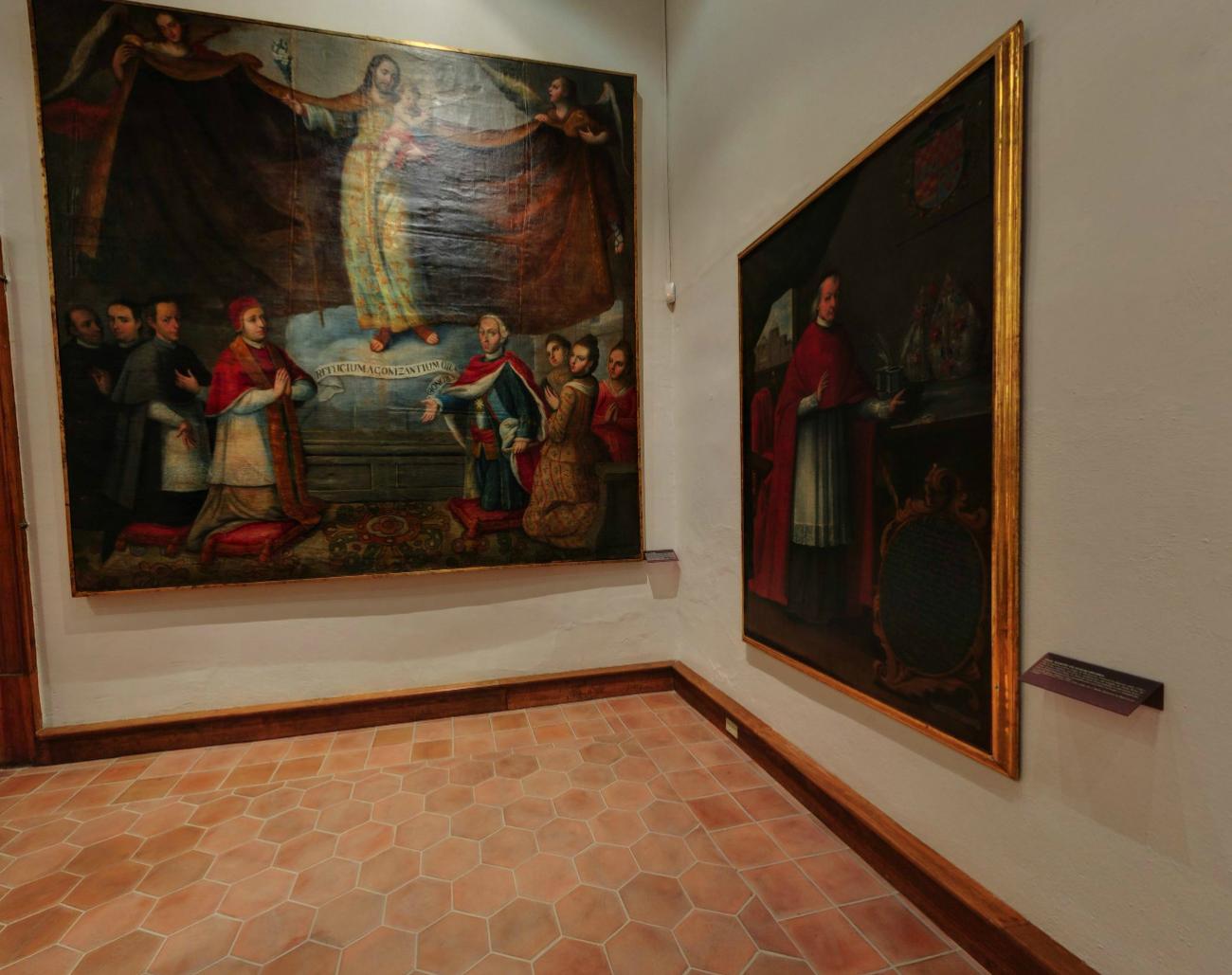
This section reflects the emergence of a new spirit sweeping across the Viceroyalty, ushering in changes that disrupted the established order. These reforms sparked reactions from both the elite and common people, laying the groundwork for rebellion.
A New Spirit Sweeps the Viceroyalty
By the late 17th century, the Enlightenment began reshaping European thought. Rational systems were applied to the sciences and arts to better understand and explain reality. Reason became the guiding light to dispel the “darkness of ignorance.”
In Spain, the Bourbon dynasty came to power in the early 18th century after the War of Spanish Succession. In line with Enlightenment ideals, they implemented major administrative, economic, and political reforms to strengthen royal authority and concentrate power in the hands of the monarch. During the reign of Charles III, cities were modernized, agricultural production and mining expanded, and trade improved. Tax collection was revamped to become more efficient—though often burdensome for the population.
The Enlightenment reached New Spain through secular and religious officials who introduced new ideas via educational institutions like the College of Mining, the Academy of San Carlos, and the Botanical Garden. Scientific journals and scholarly readings gained popularity among university circles and the elite.
By the mid-18th century, tensions between Spain and England alarmed the Crown, which feared losing its American colonies to the powerful British navy. In response, the monarchy called on the American population to form militias—a first step in a series of measures that would disrupt the colonial order and destabilize its political structure. These changes, which increased taxes, upset both wealthy merchants and the lower classes of New Spanish society.
Under Habsburg rule, Spanish America had often evaded royal edicts with the phrase “They shall be obeyed, but not executed.” The Bourbon effort to tighten control over New Spain helped set the stage for the Independence movement.

Daily Life in Valladolid de Michoacán
This section includes a depiction of the Dominican nuns' transfer to their new convent.Life in the city of Valladolid (today’s Morelia), like the rest of New Spain, was deeply structured around religious faith and devotion. The cathedral’s bell marked the rhythm of the day, which was divided into…
Daily Life in Valladolid de Michoacán
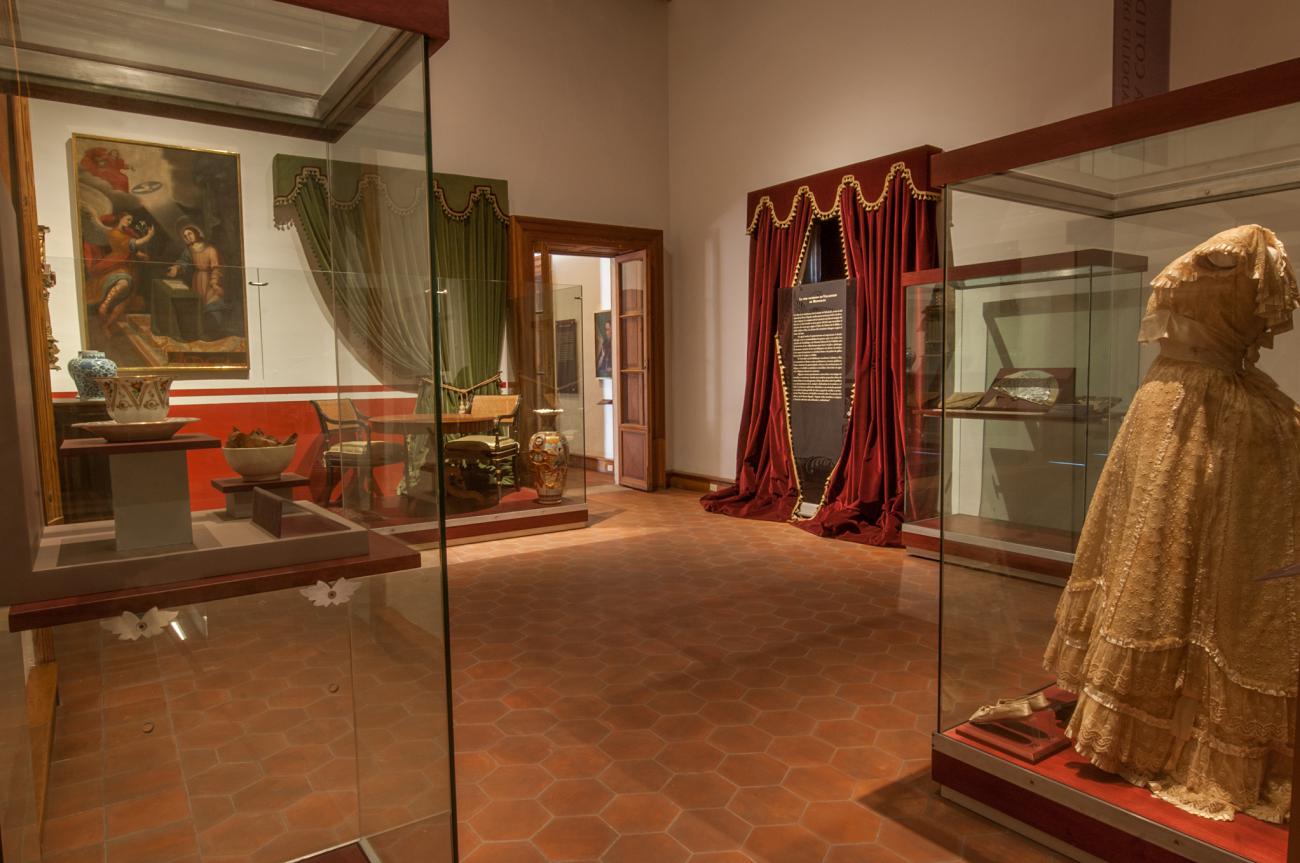
This section includes a depiction of the Dominican nuns' transfer to their new convent.
Life in the city of Valladolid (today’s Morelia), like the rest of New Spain, was deeply structured around religious faith and devotion. The cathedral’s bell marked the rhythm of the day, which was divided into seven parts—echoing the Book of Psalms, which commands praise to God seven times a day. The liturgical calendar shaped the annual cycle.
Leisure was also important. By the late 18th century, walking or carriage rides were common pastimes. The promenades of Guadalupe and Nuestra Señora de los Urdiales were favorite spots for Valladolid’s residents to show off their fashion and status. Music and social gatherings were beloved by the New Spanish people, who enjoyed cockfights, card games, and billiards.
Chocolate was the preferred beverage. Served hot or cold, it was consumed at parties, academic ceremonies, and public events. As a gesture of kindness and appreciation, the bishop and cathedral chapter offered chocolate mixed with water to parishioners during Lent.
Some prominent townspeople hosted friends in "tertulias" (evening gatherings), where they performed plays, read newspapers and books aloud, discussed politics and local affairs, and enjoyed music and dancing. Good hosts would pass around silver trays offering tobacco powder, rolling paper, and a small incense burner. Friar Francisco de Ajofrín remarked on tobacco use in New Spain: “Everyone smokes—men, women, and even the most delicate and refined young ladies.”
Independence: War and Victory
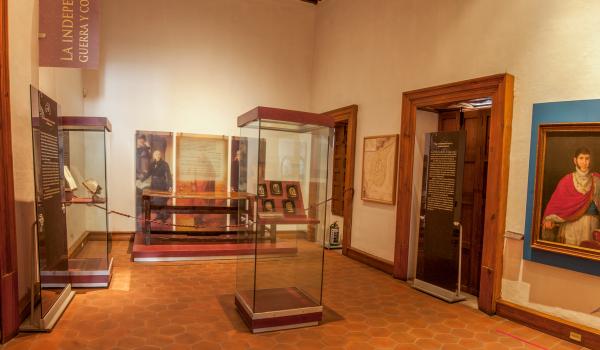
This section illustrates moments from this pivotal process in both local and national history.Independence in the Bishopric of MichoacánThe former bishopric of Michoacán enjoyed significant economic prosperity. Valladolid, Maravatío, the Bajío, and Tierra Caliente had all achieved remarkable…
Independence: War and Victory
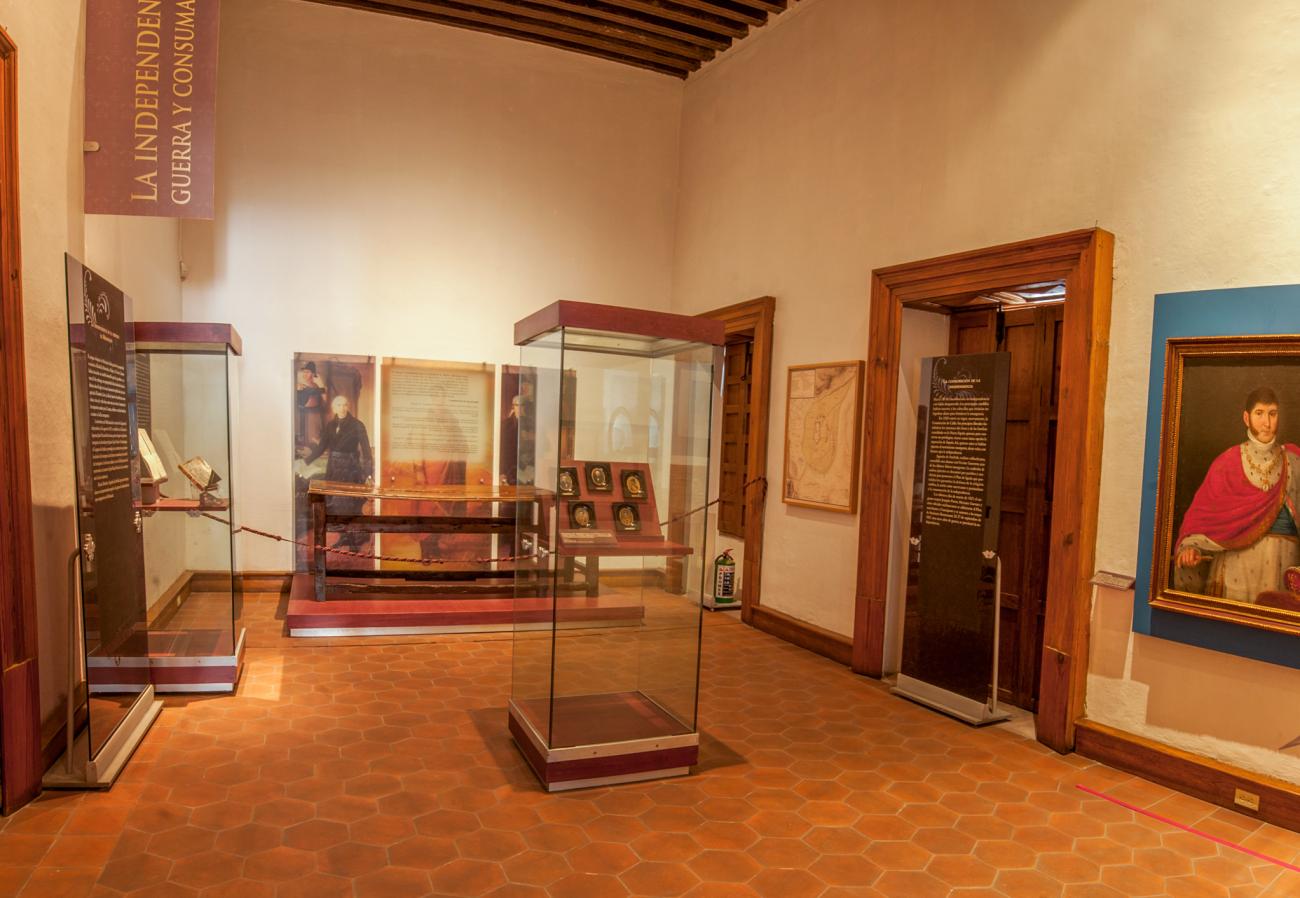
This section illustrates moments from this pivotal process in both local and national history.
Independence in the Bishopric of Michoacán
The former bishopric of Michoacán enjoyed significant economic prosperity. Valladolid, Maravatío, the Bajío, and Tierra Caliente had all achieved remarkable development in agriculture, livestock, and commerce. However, by the late 18th century, this prosperity declined due to population growth, agricultural crises, and extraordinary taxes. Hunger, forced conscription, and rising prices of goods like tobacco, wine, salt, and fine textiles—along with increased taxes imposed by the Crown—led many men to join the insurgent cause.
The province of Michoacán became a key battleground in the War of Independence. In August 1811, the Supreme National American Junta, the first insurgent governing body, was established in Zitácuaro under the leadership of Ignacio López Rayón. In Apatzingán, the Congress of Anáhuac issued a Constitution that embodied the ideals of the insurgency. Rebel-built forts harassed royalist troops, and after the death of José María Morelos—who had led a brilliant and rapid military and political campaign—the resistance was carried on almost entirely by these forces.
Both López Rayón and Morelos, as well as Agustín de Iturbide—who would later play a decisive role in achieving independence—were natives of Michoacán.
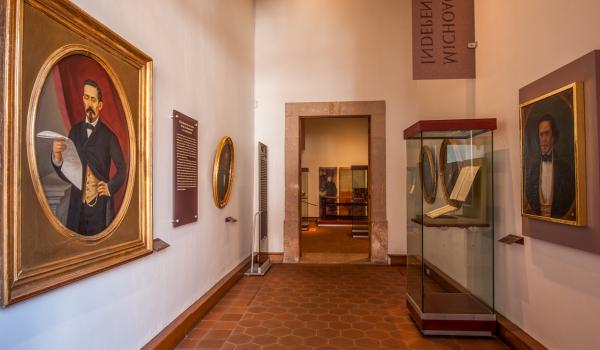
Independent Michoacán
This gallery covers the 19th century, a time when two visions of the young nation—Federalism and Centralism—vied for supremacy, and Michoacán fought to defend its sovereignty against foreign interference.Michoacán After IndependenceAfter eleven years of war, Michoacán—like the rest of Mexico—faced…
Independent Michoacán
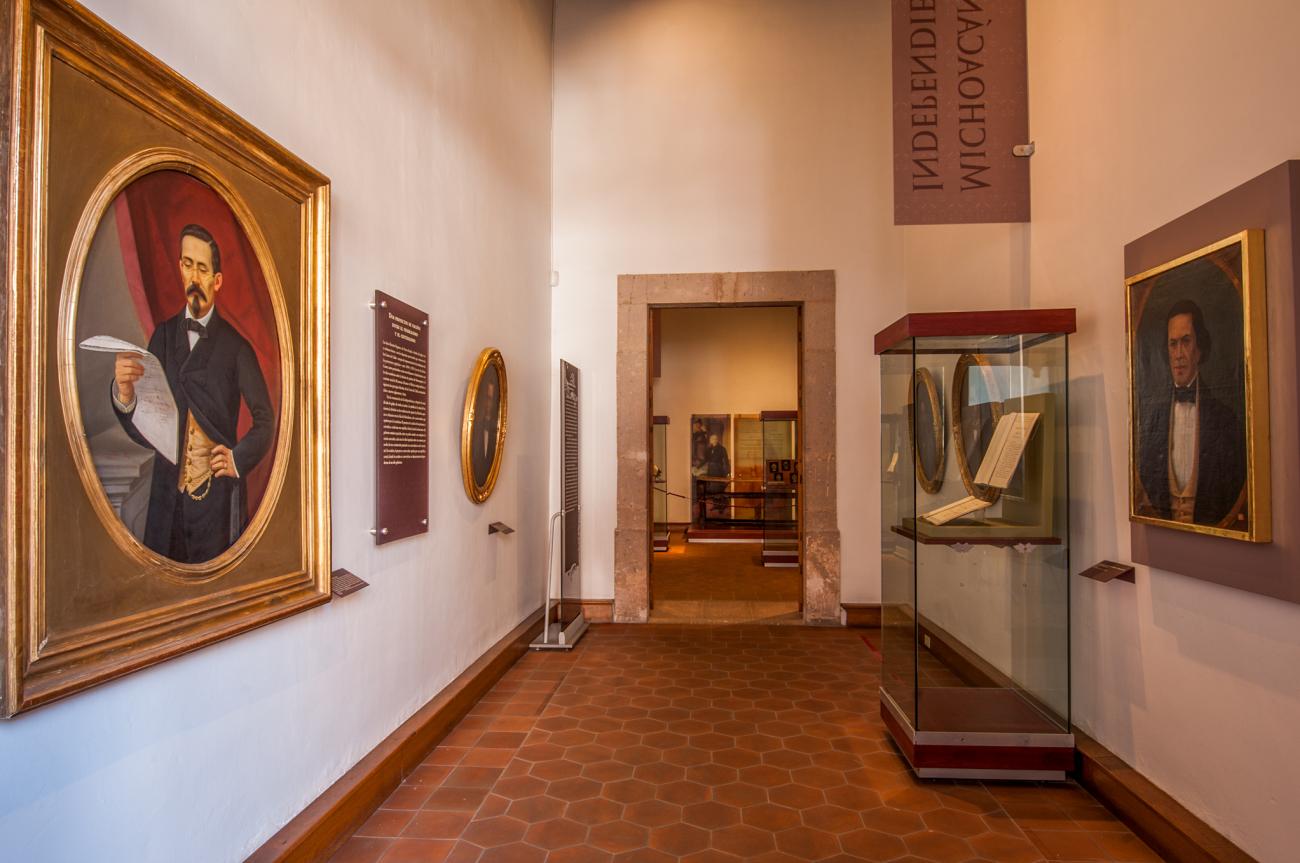
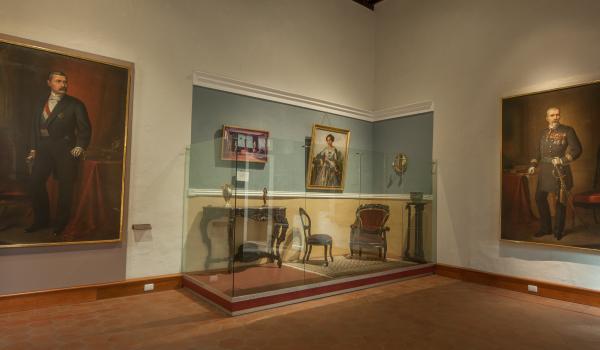
This gallery covers the 19th century, a time when two visions of the young nation—Federalism and Centralism—vied for supremacy, and Michoacán fought to defend its sovereignty against foreign interference.
Michoacán After Independence
After eleven years of war, Michoacán—like the rest of Mexico—faced severe hardship. Fields lay fallow, commerce had ground to a halt, and the rich mines of Tlalpujahua and Angangueo were largely inactive, their equipment often deliberately sabotaged by rival factions. Livestock herds declined, and the province was in chaos.
Peace finally arrived with the signing of the Act of Independence under the banner of the Three Guarantees: Independence, Religion, and Union. By 1824, with the establishment of Mexico’s first federal republic, Michoacán became one of the original seventeen states. On August 6, 1825, its first constitutional congress convened, naming Antonio de Castro as governor and rebel veteran José Trinidad Salgado as vice-governor. The state then began the slow, challenging work of rebuilding.
Political tensions soon emerged between Centralists and Federalists, whose ideas spread via secret lodges across Mexico. Revolts and uprisings occurred for decades as Michoacán stood firm for the federal republican model and defended its autonomy. Yet in 1836 the Centralist model prevailed nationally, winning adherents who would later support the conservative monarchist cause.
Turn of the Century: The Porfiriato in Michoacán
The year 1877 marked the start of the Porfirio Díaz era. In Michoacán, Manuel González’s constitutional restoration and Bruno Patiño’s appointment as governor opened the door to nearly thirty years of rule focused on modernization and progress.The early Porfiriato was far from peaceful. A rebellion…
Turn of the Century: The Porfiriato in Michoacán
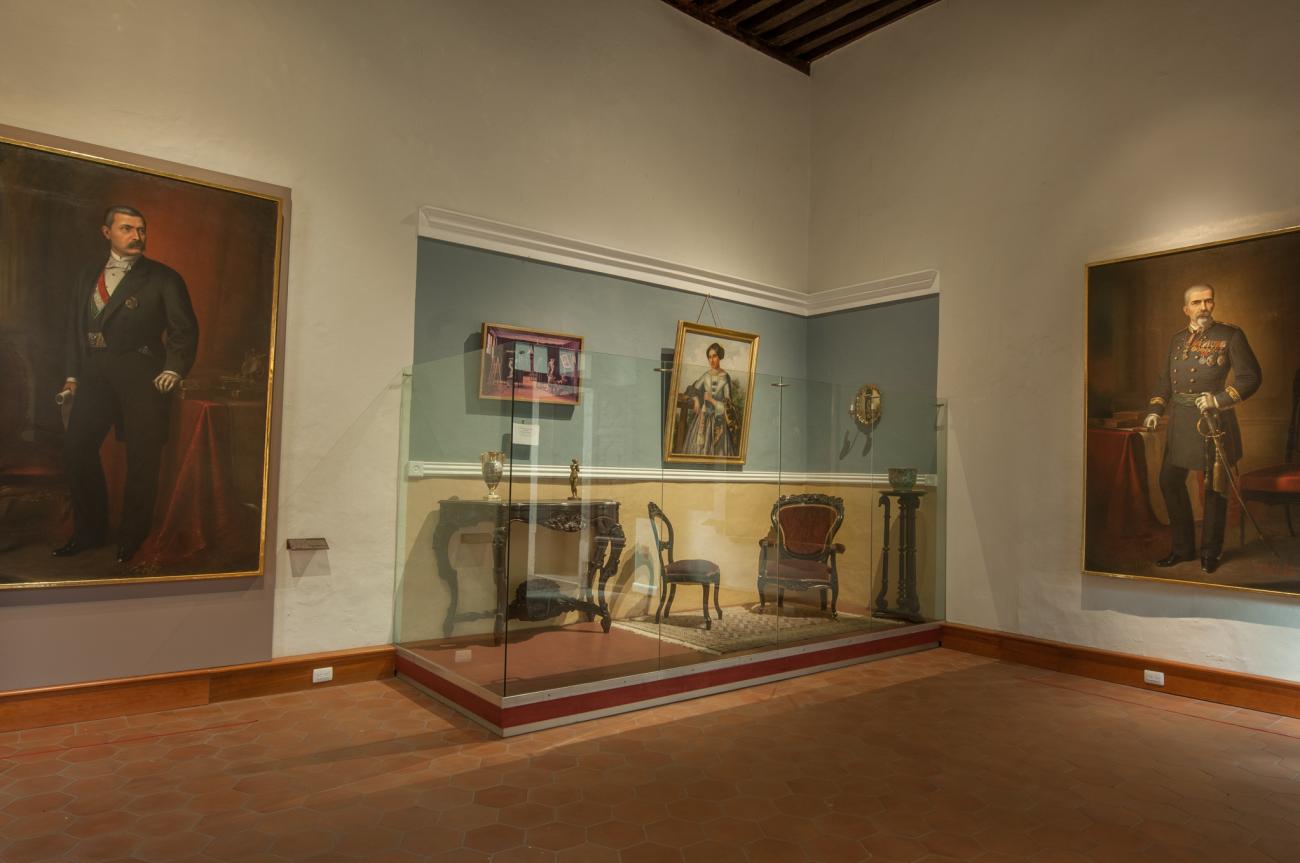
The year 1877 marked the start of the Porfirio Díaz era. In Michoacán, Manuel González’s constitutional restoration and Bruno Patiño’s appointment as governor opened the door to nearly thirty years of rule focused on modernization and progress.
The early Porfiriato was far from peaceful. A rebellion led by General Epitacio Huerta challenged Díaz’s authority, but highway bandits and kidnappers posed an even greater threat. Regional unrest was not fully quelled until 1881.
At the time, Michoacán’s population stood at 618,240, evenly split between urban centers and rural areas. In the first year of the Porfiriato, a public health campaign of vaccinations and sanitary reforms—especially in Morelia, Uruapan, Zamora, Puruándiro, and Zinapécuaro—spurred demographic recovery. Health laws were overhauled, existing hospitals improved, and new ones opened, such as the hospital in La Piedad.
In 1907, the long-standing border dispute between Michoacán and Guerrero was resolved by designating the Balsas River as the natural boundary: Pungarabato (today Ciudad Altamirano) and Sirándaro were ceded to Guerrero, while La Orilla remained in Michoacán.
Agricultural production of corn, beans, wheat, barley, chili, broad beans, sesame, and cotton increased. Textile mills sprang up in Morelia, Uruapan, and La Piedad. Relations between the State and the Catholic Church also improved; the Church helped Michoacán’s material development by renovating temples and establishing schools and health centers.
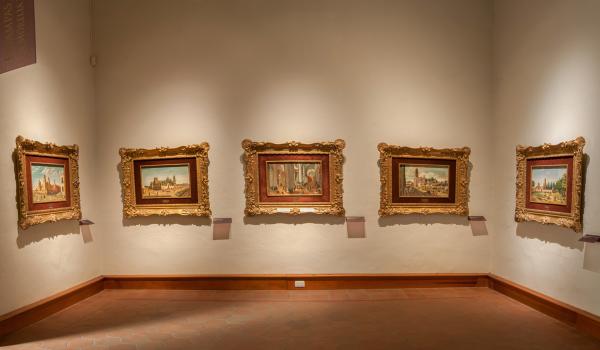
19th-Century Vignettes: Morelia through “El Pingo” Torres
Mariano de Jesús Torres (1838–1921) captured Morelia in a series of paintings that chronicle a city in transition.Every generation produces at least one chronicler—writer or artist—who records the world around them in words or images. Driven by curiosity and wonder, they explore the shapes, sounds…
19th-Century Vignettes: Morelia through “El Pingo” Torres
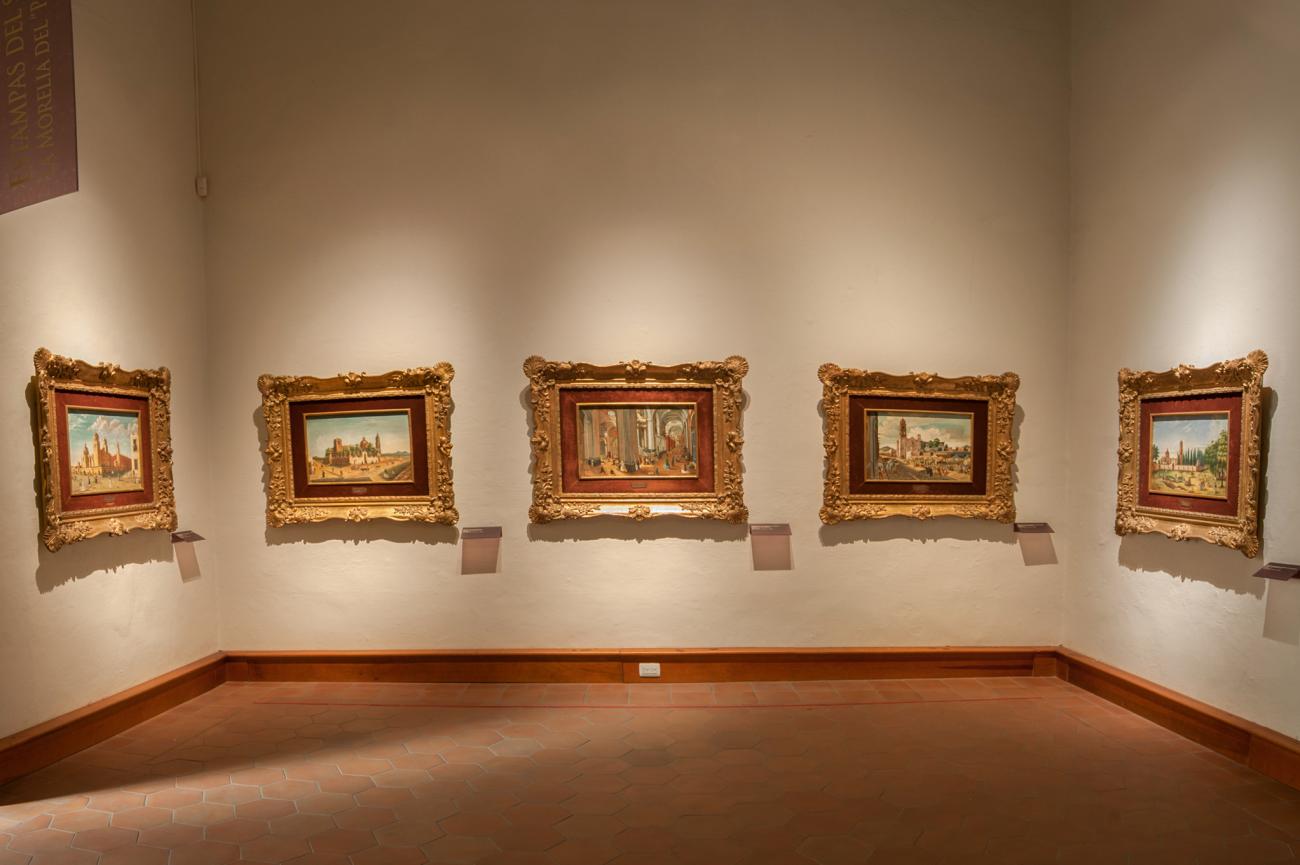
Mariano de Jesús Torres (1838–1921) captured Morelia in a series of paintings that chronicle a city in transition.
Every generation produces at least one chronicler—writer or artist—who records the world around them in words or images. Driven by curiosity and wonder, they explore the shapes, sounds, colors, and nuances of their surroundings, leaving detailed records on canvas, paper, and in print.
Mariano de Jesús Torres was a prominent 19th-century Mexican writer, poet, and journalist. Born in 1838 in Morelia—the capital of a young state debating its political identity—he studied law and embraced journalism. A liberal at heart, he became a sharp critic of Porfirio Díaz’s regime and the era’s conservatism. Through his own press, he published numerous newspapers (including the famed "El Centinela"), where he and other leading writers of his time freely tackled politics, literature, music, and poetry. His scientific curiosity also led him to publish almanacs and dictionaries.
Under the pen name “El Pingo,” Torres not only chronicled political upheavals and the moods of his contemporaries but, as a self-taught painter, he produced images of a city split between provincial calm—mornings marked by cathedral bells, the night watchman’s calls, and the creak of horse-drawn carriages—and a capital city rich with history, soon to see electric street lamps, the tram, and modern innovations. His vignettes resonate because they are both the memory of a distant past and its vivid re-creation in the present.
The Two Courtyards (Main and Right-Side)
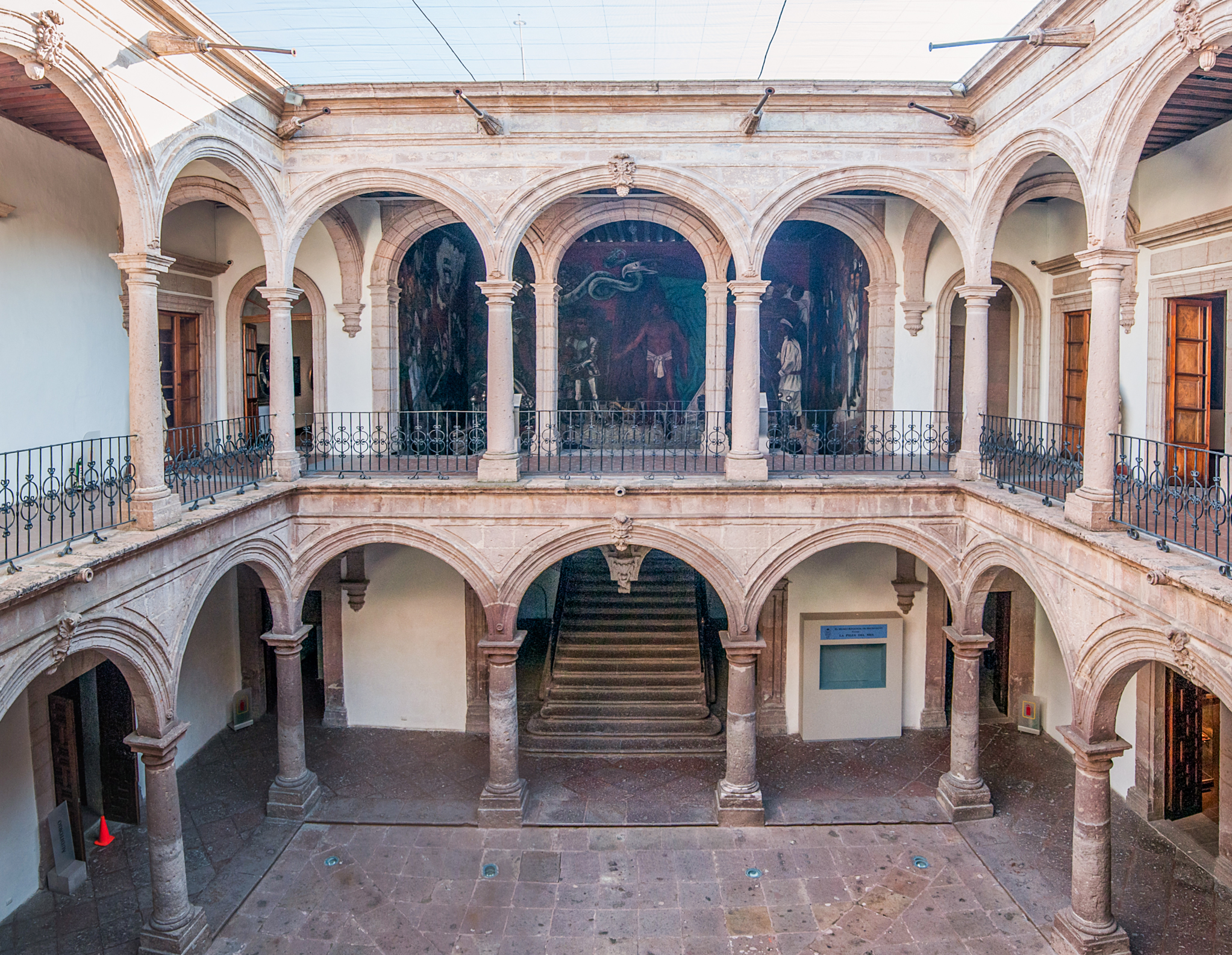
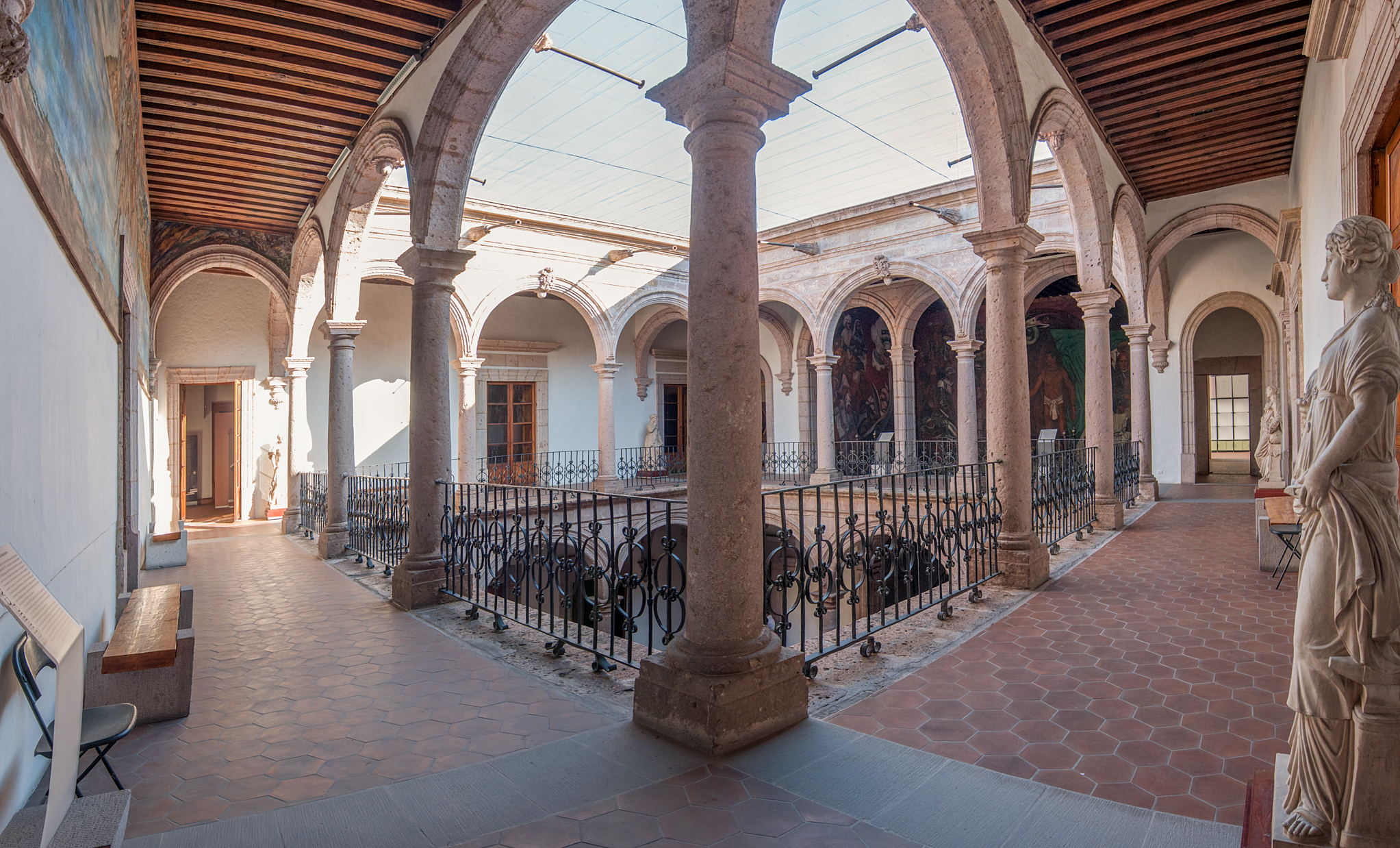
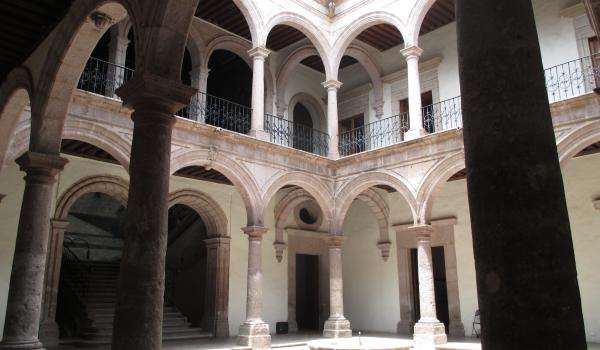
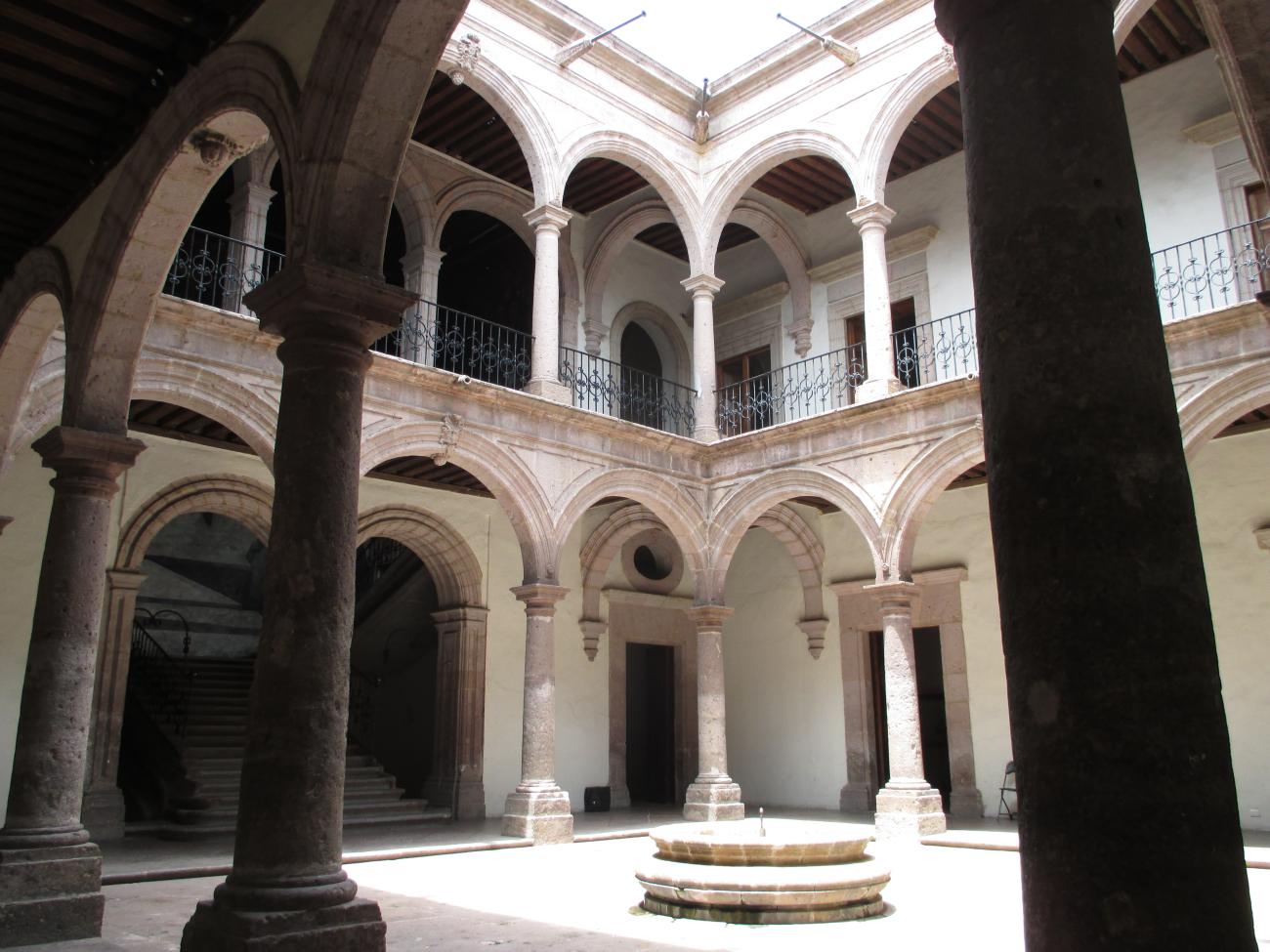
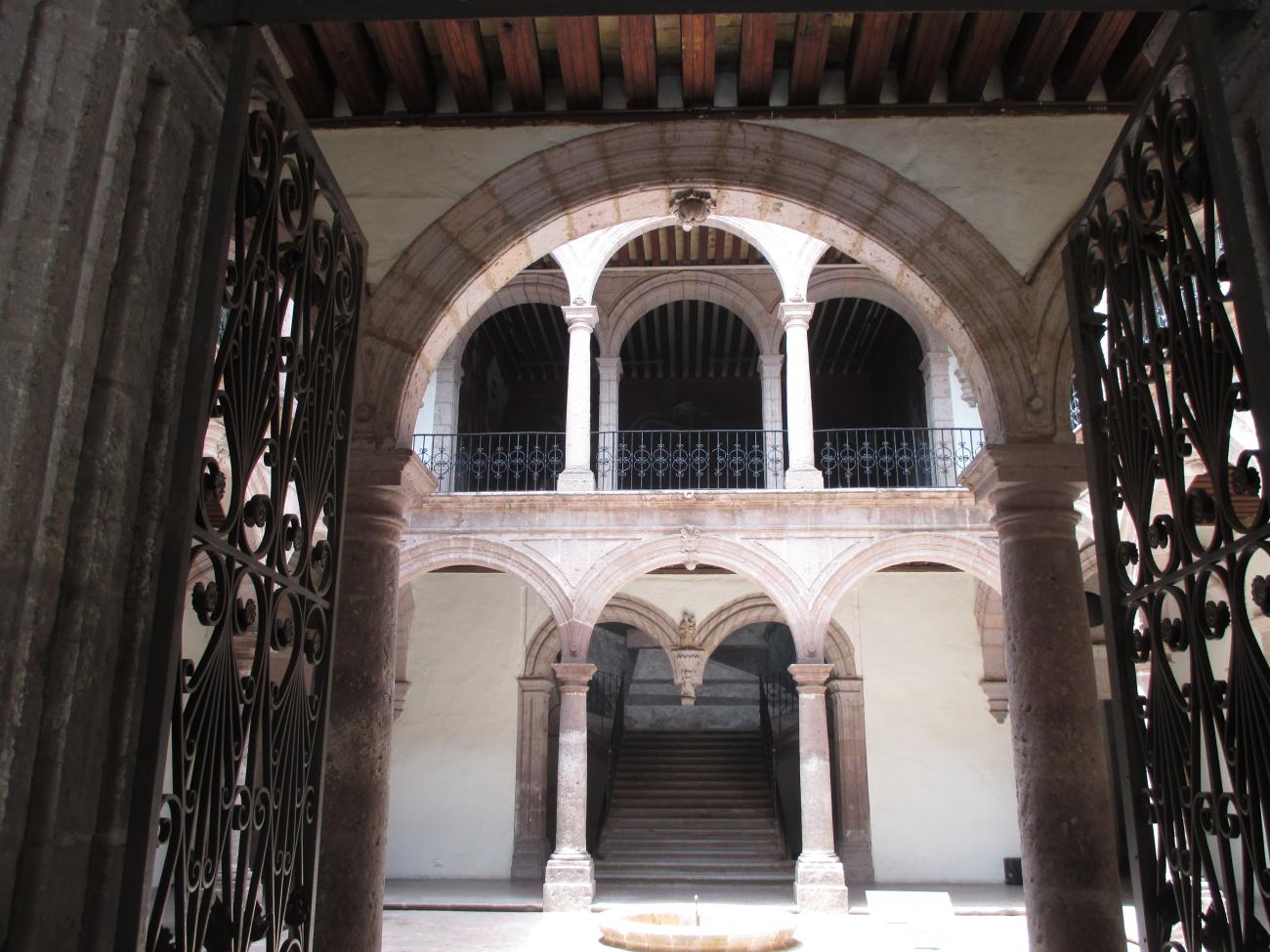
Main CourtyardSquare in plan and surrounded by covered walkways, it exemplifies symmetry and airy arches, with restrained Baroque decoration. The arcades rest on Tuscan columns and feature molded outer arches; the central arches are keyed by sculpted masks and a pine cone in the vault’s keystone,…
The Two Courtyards (Main and Right-Side)
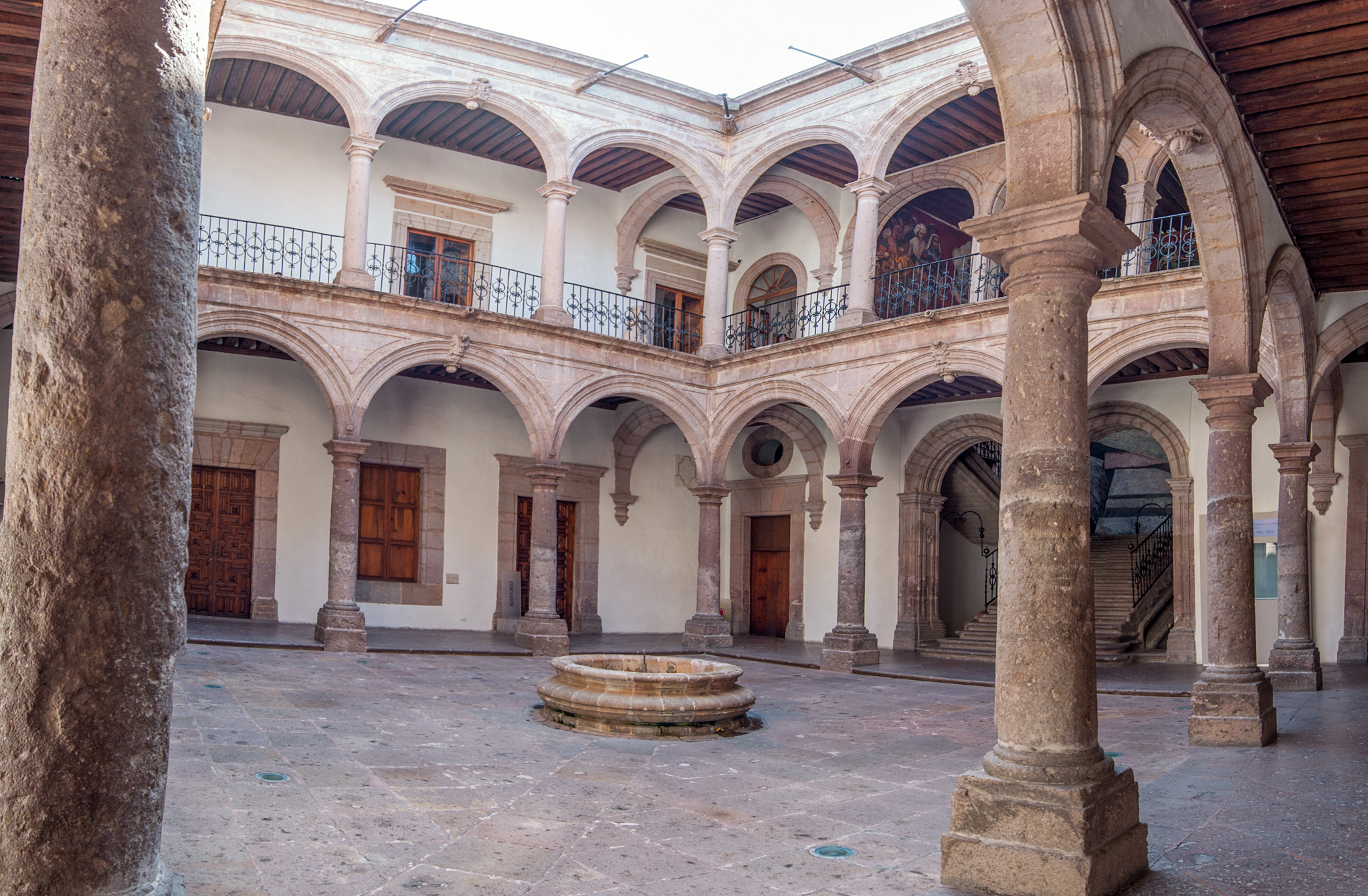
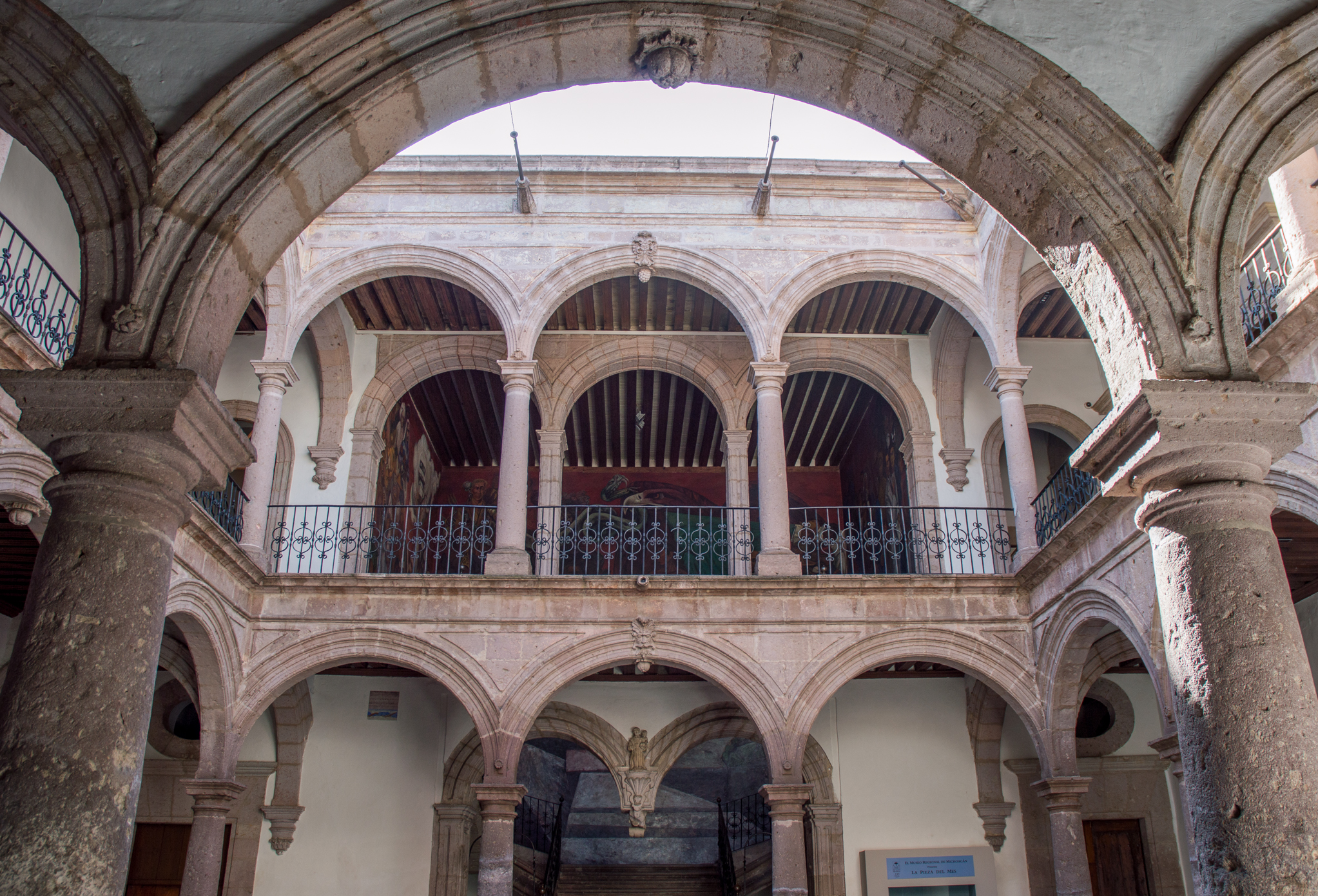
Main Courtyard
Square in plan and surrounded by covered walkways, it exemplifies symmetry and airy arches, with restrained Baroque decoration. The arcades rest on Tuscan columns and feature molded outer arches; the central arches are keyed by sculpted masks and a pine cone in the vault’s keystone, while the spandrels bear carved flowers. The columns display monolithic, subtly curved shafts.
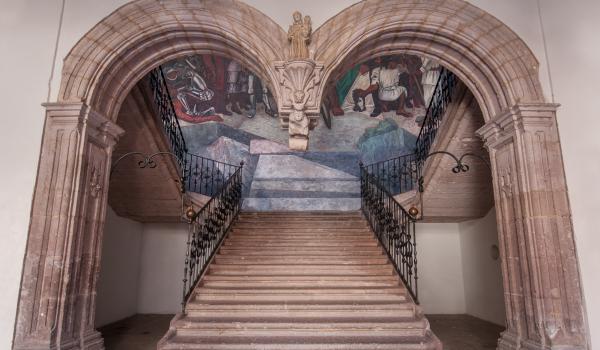
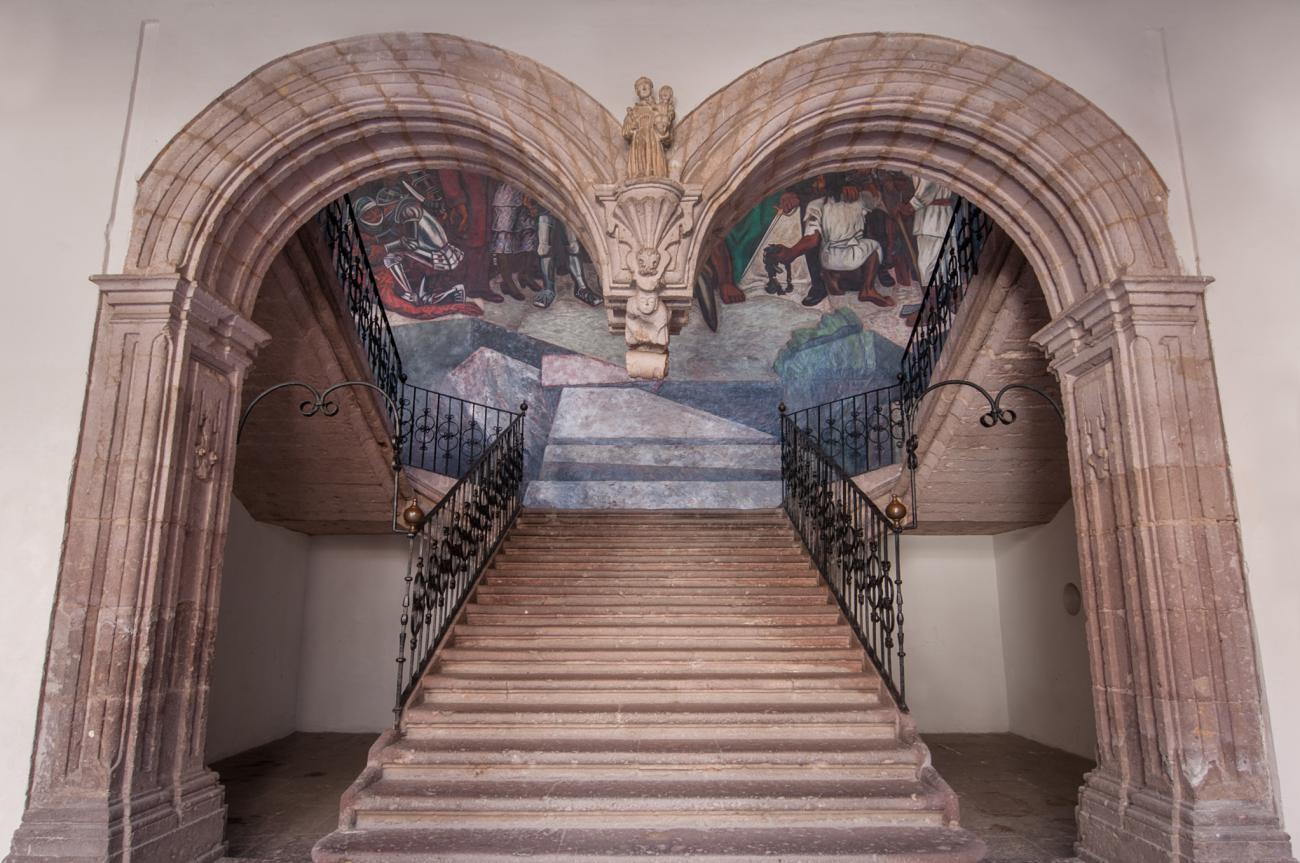
The Grand Staircase
This monumental stairway, or "escalera regia", leads from the cloister to the upper galleries, its balustrades and ornate details reflecting the Baroque taste for dramatic, flowing forms.
Document
Document
- DirecciónJaime Reyes Monroyjaime_reyes@inah.gob.mx+52 (443) 312 0407